

What should you do if you break a tooth?
Breaking a tooth can be alarming, but the first thing to do is stay calm. Depending on the severity of the fracture, acting quickly can prevent further damage. As soon as it happens, it is important to follow a few steps and seek dental care as soon as possible.
First aid for a broken tooth
If you break a tooth, follow these steps while seeking dental care:
- Rinse your mouth: Use warm water to clean the affected area. Avoid using very hot or cold water, as this can make the area more sensitive.
- Collect the broken fragments: If a piece of the tooth has broken off, store the fragment in a container with milk or, if you do not have access to milk, in water or saline solution.
- Control swelling: If there is swelling or pain, apply an ice pack to the outside of the face for 15-20 minutes to reduce inflammation.
- Avoid chewing: Do not chew with the broken tooth and try not to put pressure on it to avoid further damage.
When should you visit the dentist if you have broken a tooth?
You should see a dentist immediately if:
- You experience intense pain that does not go away.
- The tooth is severely fractured or displaced.
- The tooth is compromised down to the nerve, which can cause infections.
- There are signs of infection, such as redness, pus, or fever.
Although in some cases there may be no pain, it is always advisable to have a dentist assess the fracture to ensure that there is no internal damage, such as cracks that could worsen over time.
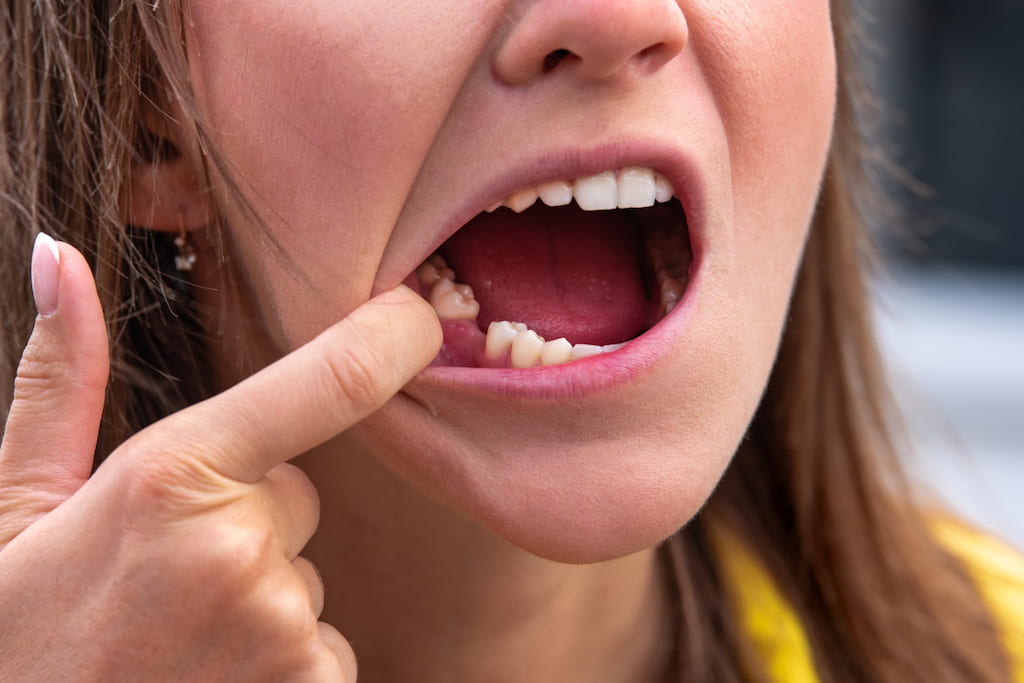
Why can a tooth break?
Tooth fractures can occur for a variety of reasons:
- Blows or trauma: Accidents or falls can damage a tooth immediately.
- Hard foods: Biting into something very hard, such as nuts or ice, can cause a fracture.
- Tooth decay or weakness: Teeth affected by decay are more likely to break due to structural weakness.
- Bruxism: Grinding or clenching your teeth at night can wear down the enamel and weaken your teeth.
- Enamel erosion: Frequent consumption of acidic foods or drinks such as soft drinks can wear down the enamel and make teeth more susceptible to fractures.ñoño
Types of dental fractures
Depending on the severity of the break, there are different types of fractures:
- Minor crack: Only affects the enamel and may not cause pain. In this case, the dentist may file down the tooth and protect it with a resin.
- Partial fracture: If a piece of the tooth has broken off but the nerve is not exposed, the dentist can rebuild it with filling material or place a crown.
- Deep fracture: When the fracture reaches the nerve or root of the tooth, root canal treatment (endodontics) may be necessary, or even extraction of the tooth if it cannot be saved.
- Complete fracture: If the tooth is completely broken or beyond repair, extraction and possible implant placement should be considered.
Can a broken tooth be repaired?
Yes, in most cases a broken tooth can be repaired. Treatment will depend on the type and severity of the fracture:
- Composite resins or fillings: For cracks or small breaks, the dentist may use resin to rebuild the damaged part.
- Crowns: If the damage is more severe, a crown can be placed to protect the tooth and restore its functionality.
- Root canal treatment: If the nerve is affected, root canal treatment followed by a crown may be necessary.
- Extraction: If the damage is irreparable, the dentist may recommend extraction of the tooth and, if necessary, placement of a dental implant to restore function.
How dangerous is it to have a broken tooth?
Having a broken tooth can be more dangerous than it seems if it is not treated in time. If the fracture exposes the nerve or dental pulp, there is a risk of infection that can spread and cause abscesses. Without treatment, the damage can worsen, which could lead to tooth loss or more invasive treatments such as root canal therapy.
In addition, a broken tooth can alter your bite, cause jaw pain, or affect other teeth due to uneven wear. If the tooth is in a visible area, it can also impact your appearance and self-esteem. That is why it is essential to see your dentist quickly to avoid complications and ensure proper repair.
Conclusion
A broken tooth is not only a cosmetic nuisance, but it can also lead to infection, pain, and further damage if not treated promptly. Acting quickly, following proper first aid procedures, and seeing your dentist as soon as possible are key steps in avoiding serious complications. With proper treatment, most broken teeth can be effectively repaired, preserving both function and appearance. Do not ignore a broken tooth; early intervention is essential to maintaining optimal oral health.