
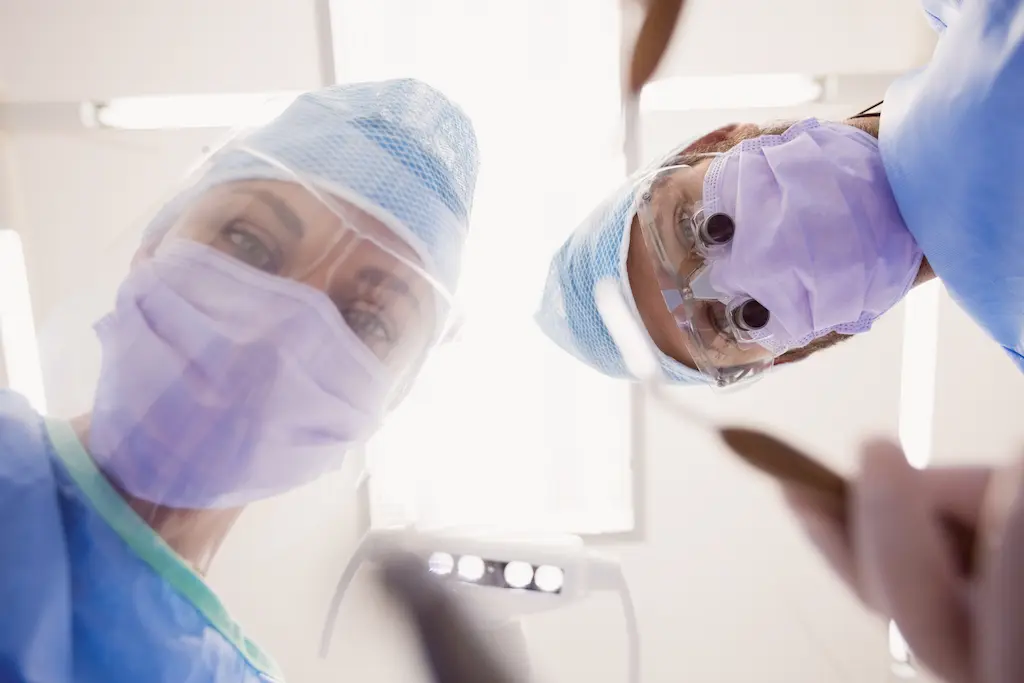
The placement of dental implants has evolved significantly in recent years thanks to technological advances. One of the most innovative and precise techniques is guided surgery. This procedure allows dental implants to be placed with millimetre precision, resulting in safer, less invasive procedures and faster recovery times for patients. If you are considering undergoing oral rehabilitation with implants, it is important to understand how guided surgery works, what its advantages are and how it differs from traditional methods.
What is guided surgery and why is it important in implantology?
Guided surgery is a computer-assisted implantology technique that allows dentists to virtually plan the placement of implants before performing surgery. A detailed image of the patient’s anatomy is obtained through a 3D digital scan of the maxilla or mandible, allowing the procedure to be planned with complete precision. This planning results in the manufacture of a customised surgical guide, which acts as a template for placing the implants in the exact location previously defined.
This methodology improves not only the precision of the procedure, but also its safety, as it minimises the margin of error and avoids sensitive anatomical areas such as nerves or maxillary sinuses. Furthermore, by reducing the need for large incisions or visual explorations, guided surgery becomes a minimally invasive alternative, ideal for many patients.
How guided surgery works step by step
The guided surgery process follows a series of perfectly coordinated steps that integrate technology, digital planning, and clinical execution. Here’s how it works:
1. Diagnosis using 3D scanning
The first step is to obtain a three-dimensional image of the oral cavity. This is achieved using a dental CT scan or a high-precision intraoral scanner. This image provides a detailed view of the bone, tooth roots, soft tissues and important anatomical structures. With this information, the specialist assesses whether there is sufficient bone to place the implant and whether additional procedures such as bone grafts are necessary.
2. Virtual implant planning
Once the scan has been obtained, digital planning software is used to simulate the placement of the implant virtually. The dentist determines the position, depth, angle and type of implant that best suits the patient’s anatomy. This phase is key to ensuring proper bone integration, chewing functionality and natural aesthetics.
3. Design and manufacture of the surgical guide
Once the plan has been defined, a surgical guide is created using 3D printing. This guide fits into the patient’s mouth and contains holes that mark the exact point where the implant should be inserted. The guide acts as a high-precision surgical template that ensures the procedure is performed exactly as it was planned digitally.
4. Performing guided surgery
During the procedure, the professional places the surgical guide in the patient’s mouth and, through it, inserts the implant into the planned location. As no large incisions are necessary, sutures are often not required and the procedure is quicker, cleaner and more comfortable. In some cases, a temporary crown can even be placed on the same day, depending on the condition of the bone and the type of implant used.
5. Postoperative monitoring
Après la pose, le dentiste vérifie que l’implant est correctement intégré à l’aide d’images et de contrôles cliniques. Des visites de suivi sont programmées afin de vérifier le processus d’ostéointégration, c’est-à-dire la liaison entre l’os et l’implant, et d’évaluer si la couronne définitive peut être posée.
What advantages does guided surgery offer over conventional techniques?
Guided surgery for dental implants offers a number of advantages for both the professional and the patient. These are the most notable:
- Surgical precision: By planning everything in advance in a digital environment, the margin for error is eliminated and implant placement is optimised.
- Less invasive surgery: Large incisions are avoided, reducing bleeding, swelling, and post-operative pain.
- Faster recovery: By minimising surgical trauma, healing is faster and with fewer complications.
- Reduced time in the clinic: The procedure is more efficient, which reduces the time spent in the dental chair.
- Greater confidence for the patient: Knowing that the procedure is digitally planned and guided by a splint provides peace of mind and security.
- Superior aesthetic results: Allows the implant to be placed in an ideal position to support a harmonious and functional prosthesis.
Cases in which guided surgery is recommended
Guided surgery is particularly recommended in cases where high precision is required or when the patient has medical conditions that limit extensive surgical procedures. Some ideal scenarios are:
- Patients with limited bone available, where every millimetre counts
- Complex cases with multiple implants
- Rehabilitaciones completas sobre arcadas dentales
- People with high levels of anxiety or fear of the dentist
- Patients with systemic diseases where reducing surgical time is vital
Conclusion: an advanced solution for more precise and safer dental implants
Guided surgery represents a major advance in the field of implantology, offering a more precise, safer and more comfortable alternative to traditional methods. Thanks to digital planning and the personalisation of each case, patients can benefit from less invasive treatments, with shorter recovery times and highly predictable results. If you are considering dental implants, do not hesitate to consult a professional who works with guided surgery. Investing in technology is investing in your oral health and long-term well-being.
Would you like to learn more about how technology improves dental treatments? Find out more on our blog.
Frequently asked questions about guided surgery
Is guided surgery more expensive than conventional surgery?
Guided surgery tends to cost slightly more than conventional surgery due to the use of advanced technology such as 3D scanning, planning software and customised surgical splint manufacturing.
However, this additional cost is more than offset by the advantages it offers: greater safety, shorter operating time, less post-operative pain and more predictable results.
Many patients consider the investment to be fully justified by the quality and peace of mind that the procedure provides.
What are the risks of guided surgery?
Like any surgical procedure, guided surgery carries some risks, although these are generally minor compared to traditional techniques.
The most common risks include mild post-operative discomfort, swelling, or minor infections, which are treatable and uncommon. By being planned in advance, the procedure minimises unforeseen events and significantly reduces the chances of major complications.
Furthermore, by avoiding critical areas such as nerves or tooth roots, guided surgery also reduces the risk of permanent damage to important anatomical structures.
Who can perform guided surgery?
Guided surgery must be performed by a dentist or oral surgeon with experience in implantology and specific training in digital techniques.
Not all dental centres have the necessary equipment, so it is advisable to go to a clinic that has digital diagnostic technology, specialised software and a 3D printing laboratory.
The professional’s experience and the use of state-of-the-art tools are key to ensuring the success of the procedure.