
Periodontal disease is characterised by red, swollen, bleeding or receding gums, as well as bad breath, painful chewing and loose teeth.
The main etiological factor is bacterial plaque. The accumulation of plaque, usually due to inadequate brushing, causes gingivitis or inflammation of the gums. If this continues over time, or if the patient has a genetic predisposition to developing periodontitis, bone loss begins to occur in the bone that supports the teeth.
Conditions that facilitate the onset of periodontal disease:
Periodontal disease CAN BE CURED. Periodontal treatment can halt bone loss, but LIFELONG MAINTENANCE is also necessary, both at home (using recommended hygiene methods) and at the dentist’s office (to access areas that the patient cannot reach and prevent recurrence).
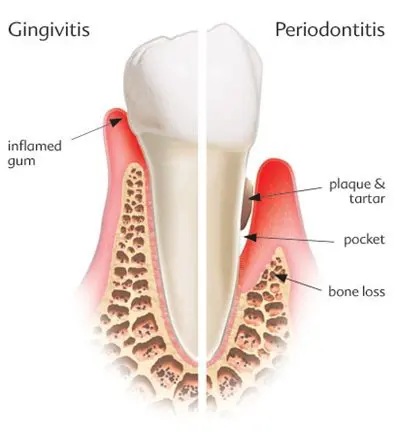
Periodontal therapy begins with a consultation and examination to determine the stage of the disease and develop a treatment plan. Depending on the stage of the disease, various treatments may be applied:
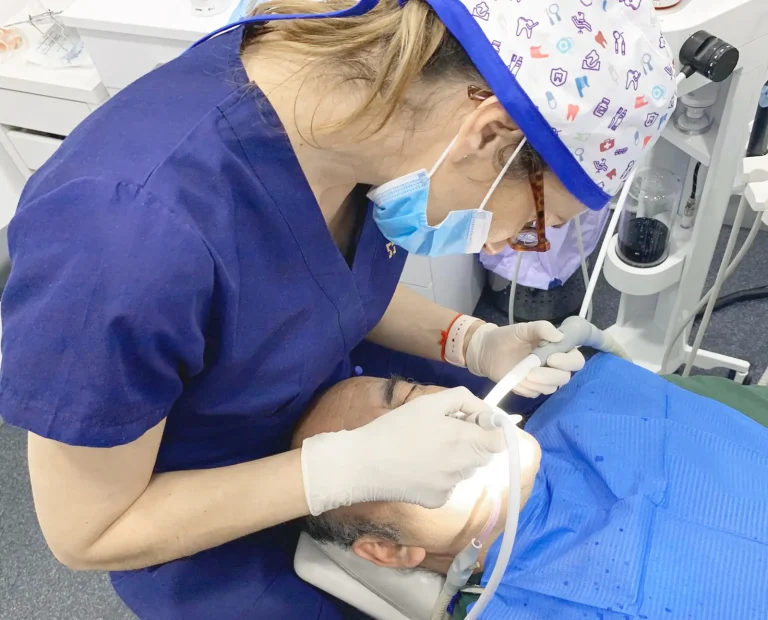
Professional hygiene is key to maintaining a healthy smile. That is why we recommend having a prophylaxis at least once a year (in some cases two or three times a year), always under the supervision of our hygienists.
At Crooke Dental Clinic Marbella, we use the latest generation AirFlow system, which removes plaque and tartar more comfortably, safely and effectively than traditional methods.
This treatment results in a healthier and better protected mouth, reducing the risk of periodontal disease and improving your well-being.
In more advanced cases of periodontal disease, as assessed by the periodontist, more extensive treatment is necessary.
Normally, several scaling and root planing sessions are required to decontaminate the root of the tooth. Beforehand, X-rays and a detailed examination of each tooth must be carried out using an electronic probe (Florida Probe), which provides information on the degree of inflammation, recession, mobility and other important data to assess the response to treatment and, based on this, establish specific guidelines for action and an individualised prognosis. It is also essential to instruct the patient in brushing and interdental hygiene techniques.
Once the scaling is complete, a microbiological analysis is performed to determine whether there are any more aggressive bacteria that may have caused the inflammation and bone loss. This will help us decide whether antibiotics are necessary and, if so, which specific antibiotic is required.
Once this first phase is complete, another periodontal assessment will need to be carried out in order to evaluate the response to treatment and determine whether surgery is necessary.
We can also carry out genetic testing to assess predisposition to the disease. This will help us to anticipate possible complications and make certain decisions for the future.


If residual pockets remain after scaling, they must be removed to prevent them from being recolonised by bacteria. Likewise, lost tissue will be regenerated whenever possible using membranes or enamel-derived matrix, and recessions will be covered with gum grafts on teeth that require them.
These are highly detailed microsurgical techniques, but with spectacular results in many cases. For the treatment to be successful, it is essential that the patient does not smoke, as tobacco compromises the vascularisation of the graft.
Grafts can be performed on teeth, implants, or in areas where parts are missing to restore volume lost after an extraction.
In some cases, we can regenerate lost bone. Basically, in cases where there are vertical interosseous defects. Depending on the morphology of the defect, we can use proteins derived from the enamel matrix or regeneration with collagen membranes.
In order to regenerate, it is essential that the patient does not smoke, and if the teeth are loose, they must be splinted first.

Gum surgery is necessary when the gum tissue around the teeth cannot be repaired with non-surgical treatments.
Professional dental cleaning twice a year and regular oral hygiene practices at home, including brushing and rinsing at least twice a day and flossing regularly, will help prevent both gingivitis and periodontal disease.
During a gum graft, tissue is taken from the roof of the mouth and attached to the affected gum line, allowing more tissue to grow and cover the exposed root surface. It is a solution for periodontal disease but is also used to beautify the smile and even prevent pain caused by temperature changes in the teeth.
A periodontal abscess occurs when a pocket of pus accumulates inside the gum. It occurs when tissue breaks down as a result of a bacterial infection in the gums or the roots of the teeth and the supporting bone.
Get to know our professional team and our state-of-the-art equipment.
We will call you to schedule a visit at the clinic nearest to you and at your preferred time.