
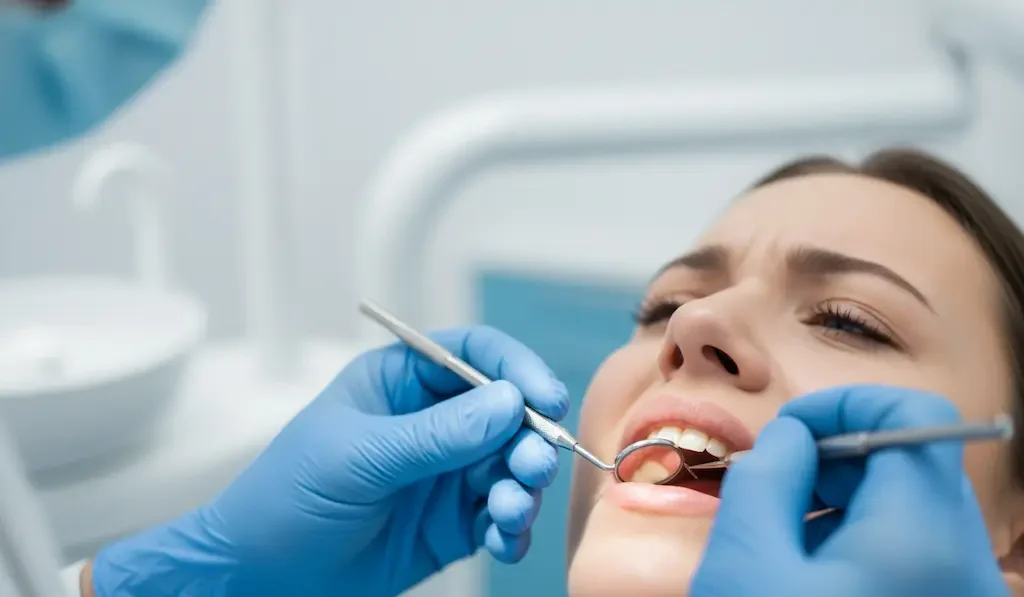
A poorly done dental filling can cause discomfort that goes beyond temporary sensitivity. Identifying it early is key to avoiding infections, persistent pain, or more complex treatments. Many people assume that pain after a filling is normal, when in fact it may be a sign that something is not working properly.
What is a poorly done dental filling?
A dental filling serves to remove decay, seal the tooth, and restore its shape and function. A filling is considered poorly done when it does not fit the tooth properly or does not fulfil its protective function, allowing leaks, pain, or alterations in the bite.
- Does not seal the cavity properly
- It fits poorly when biting down.
- Allows bacteria to enter
- Causes persistent pain or inflammation
This problem can occur with resin, composite, or amalgam fillings, and does not always manifest immediately after treatment.
Most common symptoms of a poorly done dental filling
There are several signs that may indicate the presence of a poorly done dental filling and should not be ignored.
- Pain when chewing or closing the mouth
- Intense sensitivity to cold, heat or sweet foods
- Continuous pain days or weeks after filling
- Inflammation of the gum around the treated tooth
- Feeling of high filling or poorly fitted filling
- Persistent bad breath
- Discolouration of filled tooth
A well-done filling should not cause prolonged pain once the initial adjustment period has passed.
Is it normal to feel pain after a dental filling?
Difference between normal pain and worrying pain
After a filling, it is normal to experience slight sensitivity for the first 24 to 72 hours. However, pain is no longer normal when it increases over time, lasts more than a week, appears in a throbbing or nocturnal manner, or radiates to the jaw, ear, or head. In these cases, there is usually a problem with the fit, seal, or dental nerve.
Most common causes of a poorly done dental filling
Incorrect sealing
When the filling does not seal properly, bacterial leakage occurs, which promotes the development of cavities under the filling and possible infections.
Filling too high
A filling that protrudes more than it should alters the bite, causing pain when chewing, jaw overload and tooth wear.
Proximity to the dental nerve
In deep cavities, poor insulation or insufficient protection of the nerve can cause pulp inflammation even if the filling appears to be correct externally.
Inappropriate material
The use of incorrect or poorly polymerised material reduces the durability of the filling and increases the risk of discomfort and leaks.
How can you tell if a filling is causing tooth sensitivity?
Persistent sensitivity is one of the clearest symptoms of a faulty filling. If pain occurs on contact with cold and does not disappear quickly, if you feel a sharp pain when breathing in cold air or discomfort without any apparent stimulus, there is likely to be a problem that requires professional attention.
Risks of not correcting a poorly done dental filling
Failure to treat a defective filling in time can lead to infections, secondary caries, the need for root canal treatment, tooth fracture or even tooth loss. Many of these problems could be avoided with early correction.
What should you do if you suspect that you have a poorly done dental filling?
Go for a dental check-up
The dentist will assess the bite alignment, the seal of the filling, possible nerve damage and the presence of secondary caries. Acting in time allows for simpler and less invasive solutions to be applied.
Solutions for a faulty dental filling
The solutions depend on the condition of the tooth and may include adjusting or polishing the filling, completely replacing the material, using a more suitable material or, in advanced cases, root canal treatment. Most poorly done fillings can be fixed if detected early.
Conclusion
A poorly done dental filling should not be ignored. Persistent pain, sensitivity or inflammation are clear signs that something is wrong. Detecting it early protects oral health and avoids more complex treatments, so if in doubt, a professional check-up is always the best decision.