Dental zygomatic implants for patients with boneloss
What are zygomatic dental implants?
The best option for patients with bone loss.
Zygomatic dental implants for patients with bone loss are the longest implants normally used in the mouth (around 45–55 mm compared to the conventional 10–15 mm) and are placed like conventional dental implants but anchored slightly higher up in the zygomatic bone.
Bone grafting procedures have some limitations, such as unpredictable bone resorption and the waiting time required for dental implants to be placed. Treatment concepts involving zygomatic implants have evolved as an alternative to bone augmentation procedures.
When is it appropriate to use zygomatic dental implants?
- Patients with severe bone resorption of the maxilla.
- Generally in patients who have been without teeth for many years.
- Patients who have suffered from aggressive periodontal disease.
- Patients who wish to avoid the waiting times required after a bone graft.
- Patients who have lost bone due to various conditions.
If the patient still has some bone mass in the front of the jawbone, the method to follow is to place four conventional implants in the anterior maxilla and two zygomatic implants placed posteriorly. This is the most common method and has been used successfully for the restoration of the atrophic maxilla.
This procedure is performed under local anaesthesia and conscious sedation. The anaesthetist comes to our clinic. This allows the patient to remain awake and very relaxed. This way, time passes more quickly.

Are there advantages to zygomatic dental implants over bone grafting?
Zygomatic dental implants offer certain advantages over other techniques, especially when compared to techniques that require bone grafts.
When a bone graft is performed, the bone is grafted first, which requires healing time for the bone to solidify and regenerate. Conventional implants are then placed, which also require healing time. The final teeth will be placed at a later stage.
The alternative to bone grafting is zygomatic implants. The process with these implants is faster, as the permanent teeth can be placed on the same day or the day after the implants are placed. This greatly reduces the duration of the process and the discomfort caused to patients. Above all, the patient has fixed teeth from day one, which improves their quality of life not only by allowing them to chew without problems, but also in their daily life by giving them their final smile.


How do new technologies help us?
The techniques available to us today to facilitate the procedures we perform on our zygomatic implant patients are mainly the following two:
The first is digital diagnostic imaging, which reconstructs the patient’s face in 3 dimensions. This provides a clear view of the bone available for treatment, allowing for advance planning of the procedure.
The second and most important technique is digital guided surgery planning software. This software allows conventional implants to be placed in a guided manner using a surgical splint that is prepared in advance.
We cannot do this with zygomatic implants, but it will greatly help us to plan the implants in our patient’s bone before surgery and to get an accurate picture of how the implants will look in the mouth.
This technique allows us to view anatomical pathways, plan the angle of inclination, and observe the anatomical variations that we often encounter when we begin to perform surgical procedures.
The placement of zygomatic dental implants requires adequate training and surgical experience.
Crooke Dental Clinics is one of the first ZAGA centres to obtain certification in Spain. ZAGA Centres represent a group of professionals with experience in zygomatic implants. They are world-renowned experts in the treatment of severe bone loss using zygomatic implants and the ZAGA philosophy. In addition to this, brilliant teams accompany them in their quest to provide patients with solutions to their dental problems.
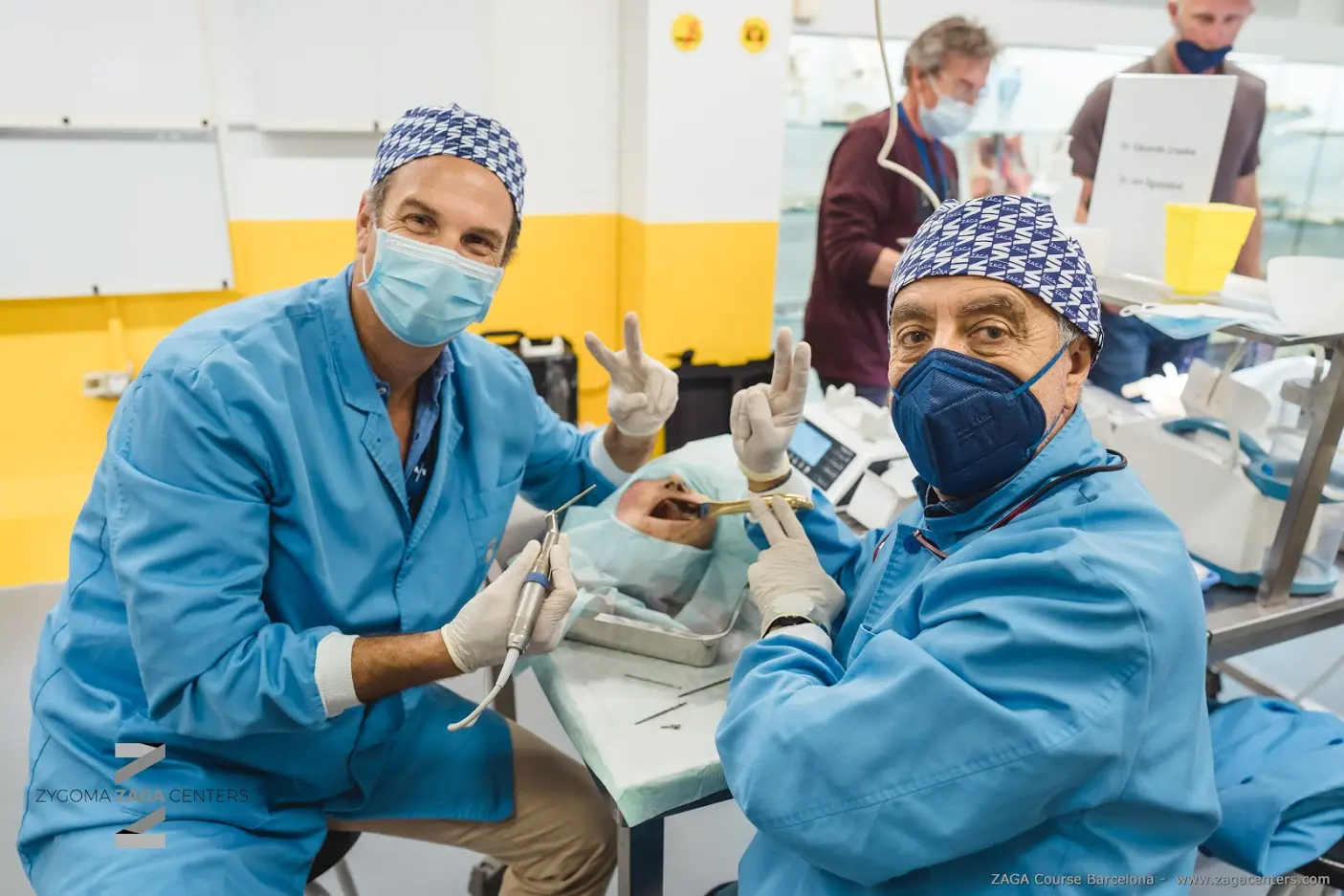
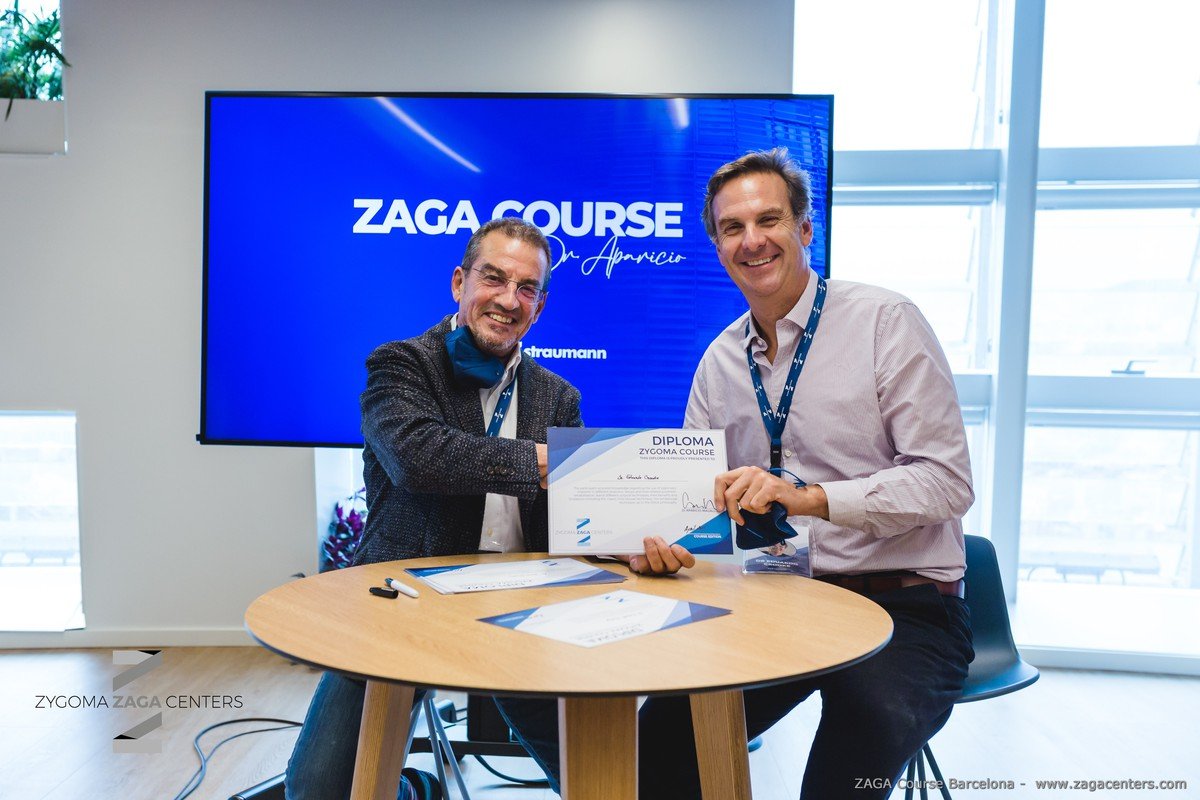
Our director, Dr. Eduardo Crooke, a specialist in implantology for patients with severe bone loss, attended the course taught in Barcelona by Dr. Carlos Aparicio, who has over 25 years of experience in zygomatic implants.
In this course, they reviewed the different surgical techniques, benefits, and limitations of zygomatic implants.

Some photographs of our director Eduardo Crooke during the ZAGA zygomatic dental implant course.