
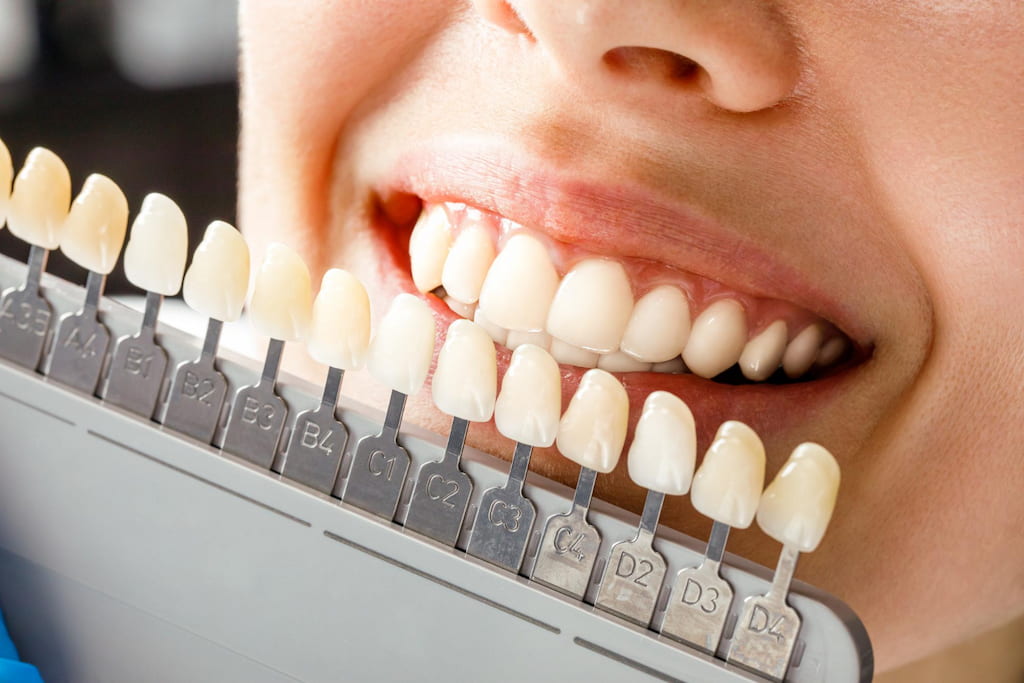
Composite or porcelain veneers: which one fits your case?
If you are thinking about improving your smile with veneers, this is probably your first question. The short answer is that there is no better material for everyone: composite usually allows very conservative, quick and easy-to-repair treatments, while porcelain stands out for its aesthetic stability and good long-term behaviour. The choice comes from studying your teeth, your bite and what you expect from the result.
How they differ
Veneers are shells placed on the visible surface of the tooth to improve its colour, shape or proportions. The two main groups are composite (resin the dentist models directly on the tooth) and porcelain or ceramic (custom-made outside the mouth and bonded afterwards).
| Feature | Composite | Porcelain |
|---|---|---|
| Fabrication | Direct, in the clinic | Custom-made, with a lab |
| Tooth preparation | Often minimal | Depends on the design needed |
| Aesthetics | Very good when well done | Very high, especially in translucency and stability |
| Colour stability | May lose shine or stain | Greater resistance to colour changes |
| Repair | Simple, in the clinic | More complex; some fractures require replacing the veneer |
| Appointments | Often one session | Several phases |
| Initial price | Generally lower | Generally higher |
When composite usually fits
When the changes sought are moderate, when preserving as much enamel as possible matters or when the initial budget weighs heavily. Its great practical advantage is repairability: if wear or a small fracture appears over the years, it can be touched up in the clinic without replacing the whole piece. Its limit is that it can lose shine or stain over time, especially with coffee, tea, wine or tobacco, and may need periodic polishing.
When porcelain usually fits
When the aesthetic change is significant and maximum stability is sought: ceramic reproduces the translucency of enamel very well and keeps its colour better over the years. In exchange, it usually requires more phases, a higher initial investment and, if it fractures, repair is more complex.
The material does not decide everything
A natural-looking veneer does not come from the material alone: design, colour selection, layering or bonding technique, the laboratory and the professional’s experience weigh as much or more. A porcelain veneer is not automatically more natural than a well-made composite one.
How long do they last?
In general terms, porcelain veneers show greater long-term survival than composite ones and less need for touch-ups. The current article cites a systematic review of around 6,500 porcelain veneers with an estimated cumulative survival of 95.5% at ten years. (Editorial note: verify the exact reference of that review before publishing and cite it with author, journal and year.)
In any case, real lifespan depends on the bite, teeth grinding, hygiene and maintenance: there is no exact figure that applies to everyone, and it is wise to distrust anyone who promises a specific duration.
Stains and maintenance
Porcelain resists stains better. Composite may need periodic polishing and touch-ups. In both cases, daily hygiene and check-ups are what most extend the life of the result.
Price: initial and total
Composite is usually cheaper at the start because it is done directly in the clinic. Porcelain costs more initially but usually needs less maintenance. Comparing quotes by the starting price alone can backfire: also ask what touch-ups or replacements each option foresees and what the quote includes.
Other frequent questions
Can composite and porcelain be combined in the same smile? Yes; each tooth can have a different indication. The plan aims for a uniform result even if the materials vary.
If a veneer breaks, what happens? With composite, it can often be repaired in the clinic. With porcelain, depending on the fracture, a new one may need to be made. That is why assessing teeth grinding matters before choosing.
I grind my teeth at night. Can I have veneers? Grinding is not an automatic ban, but it changes the design, the choice of material and usually requires a protective splint. It must be assessed before deciding.
The choice is made on your teeth, not in the abstract
At Crooke Dental Clinic, a personalised study makes it possible to assess which option fits each case and to design a treatment aimed at a natural, functional and durable result.
If you are comparing options, you may also be interested in the difference between [veneers and crowns] (Editorial note: link to the 21 Nov veneers-or-crowns article once published; until then, remove this link) and bringing your questions to the consultation.
General information for patients. This article does not replace an examination or your dentist’s instructions.