
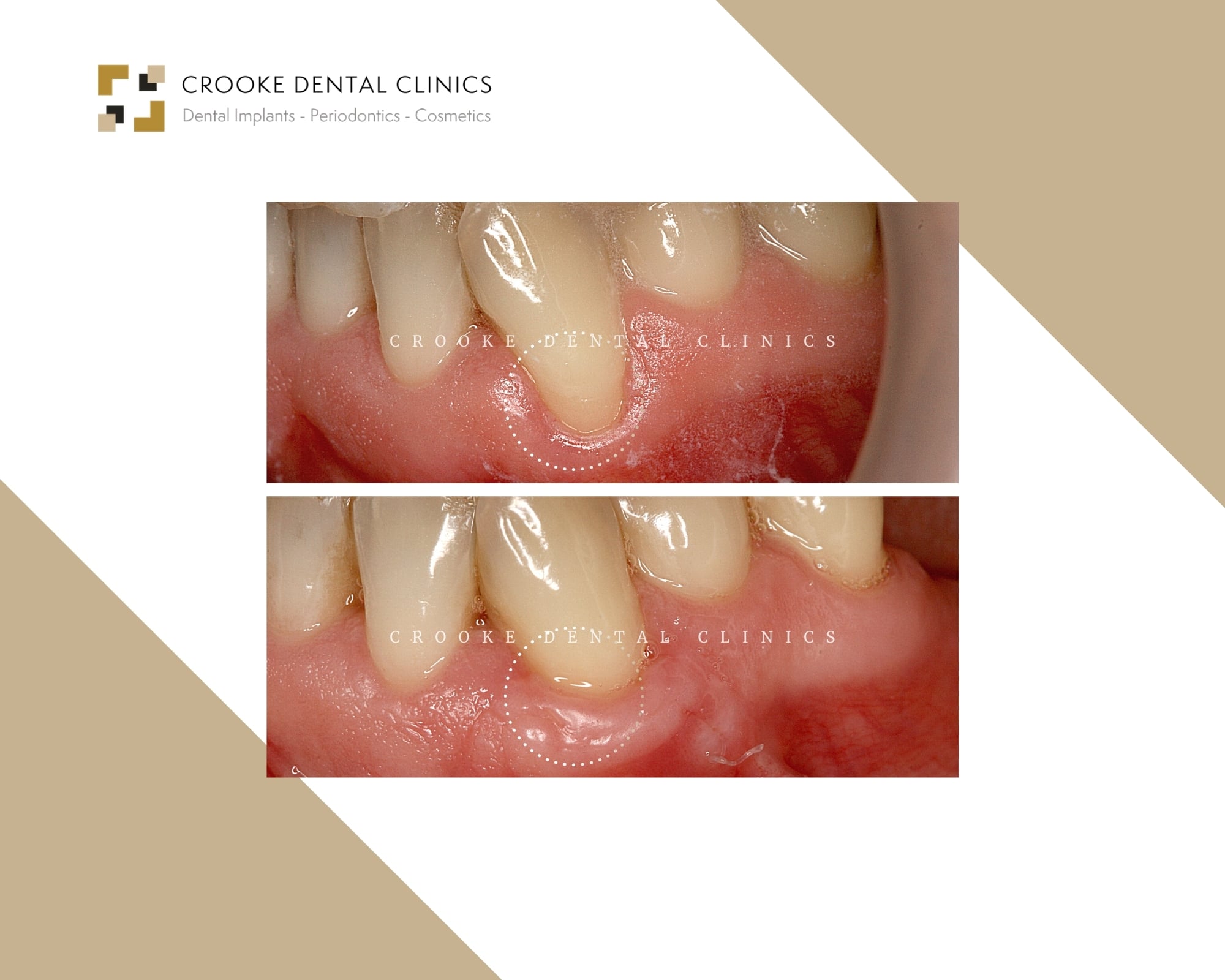
Can I get dental implants if I have periodontitis?
In many cases, yes. But there is one prior condition that is not negotiable: the periodontitis must be treated and controlled before implants are placed. A history of gum disease does not rule you out; having it active and untreated does.
First, healthy gums
An implant integrates with the bone and is surrounded by gum, just like a natural tooth. If there is an active gum infection in the mouth, bacteria can also affect the area around the implant and compromise its survival. That is why the team checks your periodontal condition before planning any surgery.
Periodontitis is a disease that destroys the bone and tissues supporting the teeth. That bone is precisely what an implant needs to hold on to, so the disease matters twice over: it raises the risk around the implant and it may have reduced the available bone.
Active disease versus controlled disease
This is the key distinction. Active periodontitis shows bleeding, deep pockets around the teeth and often mobility. In that situation, placing implants carries a high risk of complications.
Controlled periodontitis is something else: after periodontal treatment, bleeding and inflammation have been reduced and the disease is stable. Many people who lost teeth to periodontitis wear implants successfully, but their history still counts: someone who has had periodontitis has a higher risk of inflammation around implants, and that is offset with stricter maintenance.
The usual path
- Periodontal treatment. Deep cleaning of the pockets and control of the infection, together with hygiene guidance adapted to you.
- Reassessment. The team checks that the disease is controlled before talking about implants.
- Implant study. Imaging tests and planning, also assessing whether bone loss requires regeneration.
- Surgery and prosthesis. Only when the mouth is in the right condition.
This order is not a formality: treating the gums first is what gives implants an environment in which they can last.
Maintenance: the part that never ends
Inflammation around an implant (peri-implant mucositis and, if it progresses, peri-implantitis) can develop faster and be harder to treat than periodontitis around a tooth. Someone with a history of periodontitis starts with a higher risk.
That is why, after implants, the plan does not end with the prosthesis: adapted daily hygiene, regular professional check-ups and coming in promptly if you notice bleeding or inflammation around an implant. Catching a problem early is what allows it to be treated simply.
What you can do right now
- Follow the periodontal treatment and the hygiene guidance the team gives you.
- Talk about tobacco: smoking raises the risk of complications both for periodontitis and for implants.
- Tell the team which medicines you take and which conditions you have; some change the planning.
- Do not postpone a check-up if you notice bleeding when brushing: the sooner it is assessed, the simpler it is.
Other frequent questions
I lost teeth to periodontitis. Will my implants last less? The history raises the risk of complications; it does not doom the treatment. With the disease controlled and serious maintenance, many people keep their implants for years. What cannot be promised is an equal lifespan for everyone.
What is peri-implantitis? It is inflammation with bone loss around an implant. It starts as gum inflammation (mucositis), which is treatable; if it is not addressed, it can progress. Check-ups exist to catch it at that early stage.
Can I smoke if I have implants? Tobacco is one of the main risk factors for implant failure and for periodontitis. Talking it over with the team before treatment lets you know your real risk and the options for help with quitting.
The first step is assessing your gums
At Crooke Dental Clinic, before talking about implants we assess the health of your gums and your bone, because the treatment’s durability depends on it.
If you have had periodontitis and are considering implants, start by learning how we approach a full-mouth rehabilitation and bring your questions to the consultation.
General information for patients. This article does not replace an examination or your dentist’s instructions.